Planting It Forward: Dig, Divide, Donate
Published on
Late summer into fall is a great time to refresh the garden and perennials are dynamic plants that can quickly fill a space when they’re planted in the right location. Dividing healthy, established plants provides plenty to share with friends, create a new garden bed, or fill bare spots in the landscape.
Many perennials readily reseed, and volunteer seedlings often appear where they aren’t wanted. A little strategic thinning and dividing keeps the garden looking intentional while creating new plants to enjoy or share.
Many popular perennials that benefit from division, include:
- Black-eyed Susan (Rudbeckia)
- Bee Balm (Monarda)
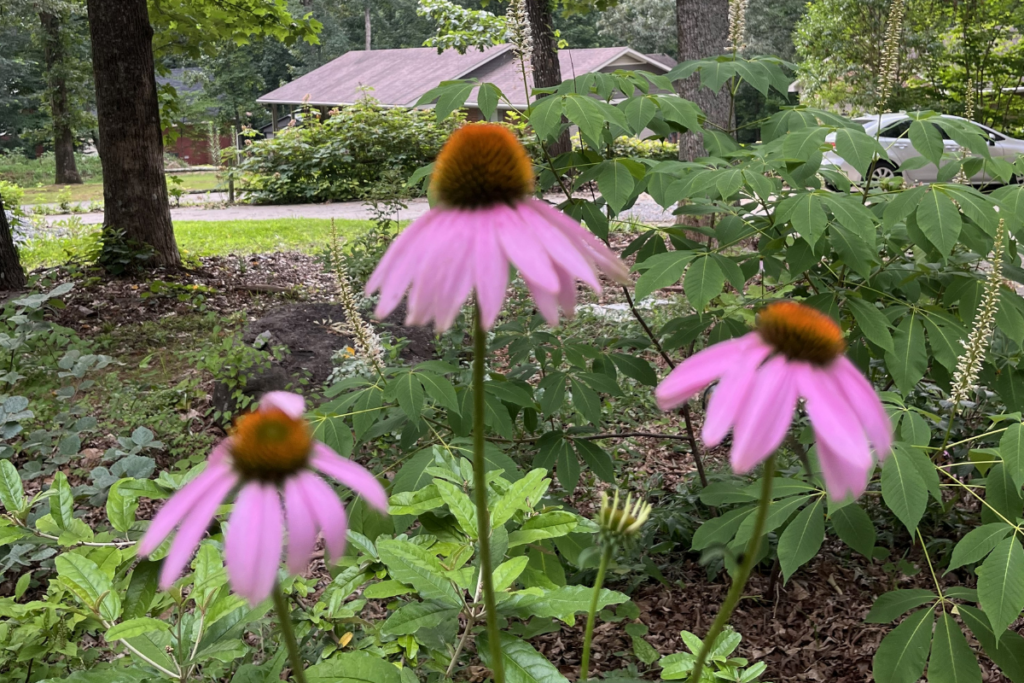
- Coneflower (Echinacea)
- Coreopsis
- Coral Bells (Heuchera)
- Creeping Phlox (Phlox subulata)
- Cranesbill Geranium (Geranium)
- Daylily (Hemerocallis)
- Garden Phlox (Phlox paniculata)
- Hosta
- Bearded Iris
- Joe-Pye Weed (Eutrochium)
- Penstemon (Beardtongue)
- Shasta Daisy (Leucanthemum)
- Yarrow (Achillea)
Dividing Tips
Preparation always leads to success. Gather a sharp shovel, extra pots and fresh potting soil, and be ready to water plants immediately after dividing and replanting.
The size of each division depends on the plant. With bearded iris, the older center rhizomes can often be discarded because the newer outer rhizomes produce the best flowers. Daylilies can be divided into individual fans, although larger divisions will establish and bloom more quickly. Clump-forming perennials such as Black-eyed Susan, Bee Balm and Yarrow are very forgiving. As a general rule, leave at least a 6-inch clump in place so the original plant remains healthy and vigorous.
Wondering what to do with the extras? Friends and neighbors are often thrilled to receive free plants. Divisions can also be offered through neighborhood social media groups, or by placing a “Free Plants” sign near the road. Sharing plants is a wonderful way to build community while helping others create beautiful, pollinator-friendly gardens.
As landscapes evolve, consider replacing portions of lawn with mixed perennial borders that include at least 70% native plants. Native species support pollinators and birds, improve water quality by reducing runoff, require fewer inputs once established. They also create healthier, more resilient landscapes for both people and wildlife.
Every plant shared helps grow a greener community.